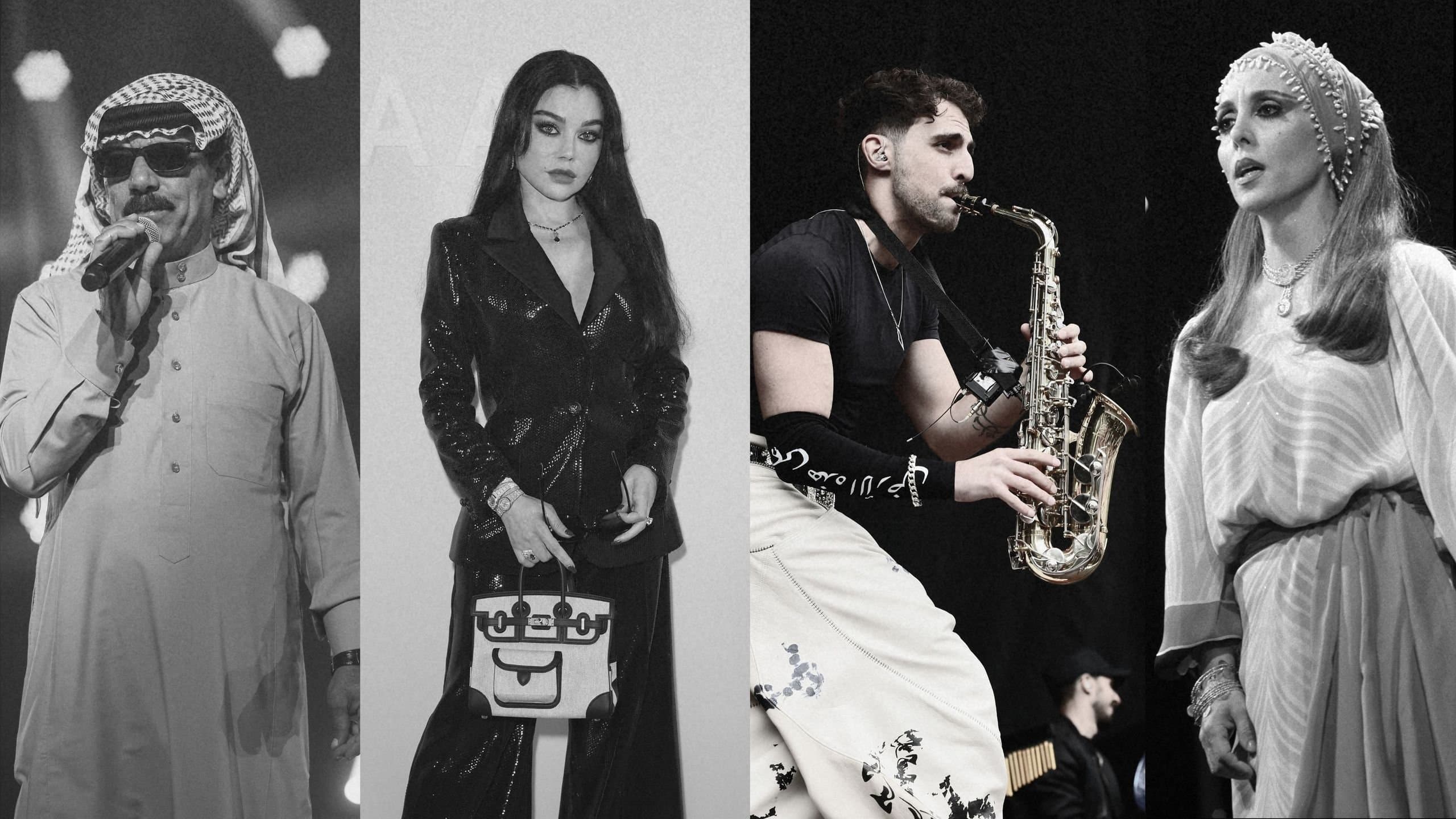
Across the region, the musicians who stay memorable tend to be the ones whose look extends the story their music is already telling rather than sitting apart from it. As Lebanese stylist Tamara El Attar puts it, “style is there to complement what the artist is already conveying,” and Egyptian stylist Rana Rabie makes a similar case for intentionality: nothing in a considered look is there by accident.
A few names carry that idea further than most. Saint Levant works a retro, deliberately androgynous mix; Tul8te leans fully into romantic imagery through custom pieces in soft tones. Fairuz built an entire visual identity out of elegant restraint and fluid silhouettes, while Warda al-Jazairia went the opposite direction, using structured, powerful styling to project strength. Ziad Zaza has built a reputation on transgressive, deliberately daring choices, and Haifa Wehbe more or less defined a specific strand of 2000s Arab pop maximalism on her own.
Further back, Omar Souleyman turned near-total uniformity, the same silhouette, show after show, into its own kind of signature, and Oum Kalthoum treated performance dress as ceremony, elaborate enough to match the scale of her concerts. More recently, Zeyne has worked Palestinian heritage into her styling with clear intention rather than as a passing reference, and Amir Eid has kept a consistent rock-and-roll visual identity across a long career, the kind of throughline that makes an artist recognizable before they've sung a note.