Three Young Australian Women Are Showing What Change Looks Like on International Day of the Girl
A teenage climate campaigner, a mental-health founder, and a 20-year-old who ran for parliament — three young women already doing the work International Day of the Girl asks everyone else to catch up on.
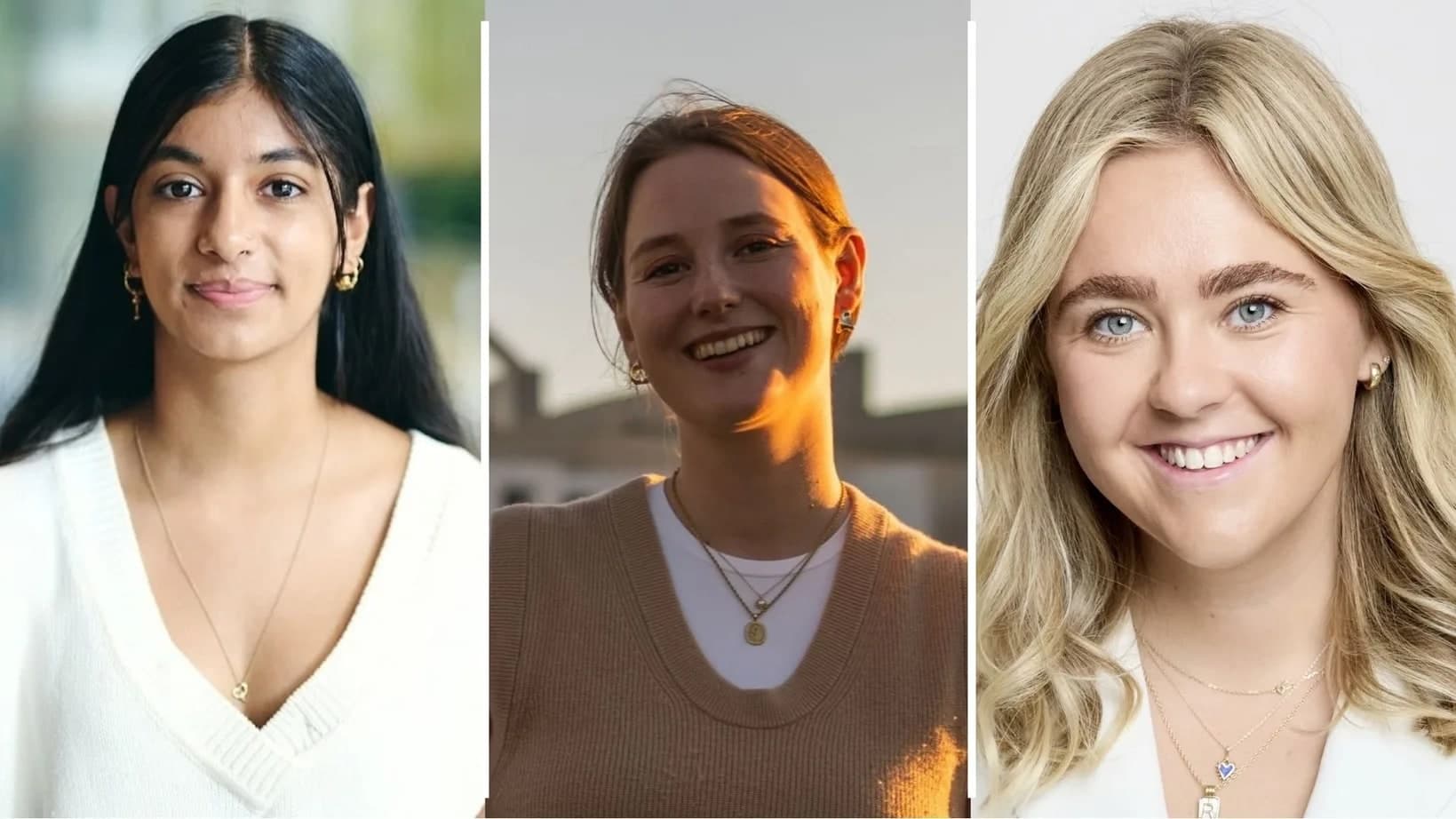
Three young Australian women pictured side by side in individual portraits: Anjali Sharma, Ruby Riethmuller, and Lucy Skelton
Every October 11, International Day of the Girl turns attention to what still has to change before girls and young women get an equal shot at opportunity, safety, and an actual say in decisions that shape their lives. Three young Australian women are a working answer to what that change already looks like.
Anjali Sharma was 14 when she first got involved in climate activism. Born in India and raised in Australia, she went on to co-found the Duty of Care campaign with two other young organisers, pushing for a law that would require the federal government to weigh the wellbeing of children and future generations before approving projects with long-term climate consequences. She's since become a regular voice in conversations about climate policy and gender equality that reach well past youth-only spaces.
Ruby Riethmuller was 22 when she started Womn-Kind, built around mental health support for girls, with a particular focus on the gaps that widen the further you get from a capital city. Coming from regional Australia herself, she's grown the project to reach tens of thousands of young people, aiming squarely at a support gap that city-based services tend to miss.
Lucy Skelton ran for a seat in the Victorian parliament at 20, during the 2022 state election. She later founded FORE Good, an organisation built around gender equality, climate action, and safety policy, and now leads programs where women make up roughly 70 percent of participants.
Line up their work and the same cluster of problems shows up again and again: too few girls in the rooms where decisions get made, patchy mental health support once you leave a city centre, safety risks — including sexual assault and harassment — that shape how young women move through public life, and a widening gap between heavily online social lives and the offline mentorship that actually turns ambition into a career.
None of the three are waiting for institutions to get there on their own. A climate campaign built by teenagers, a mental health network built by someone barely out of her own teens, a political run before most people finish university — the throughline is the same: change arriving early, led by people usually told they're too young to be the ones leading it.